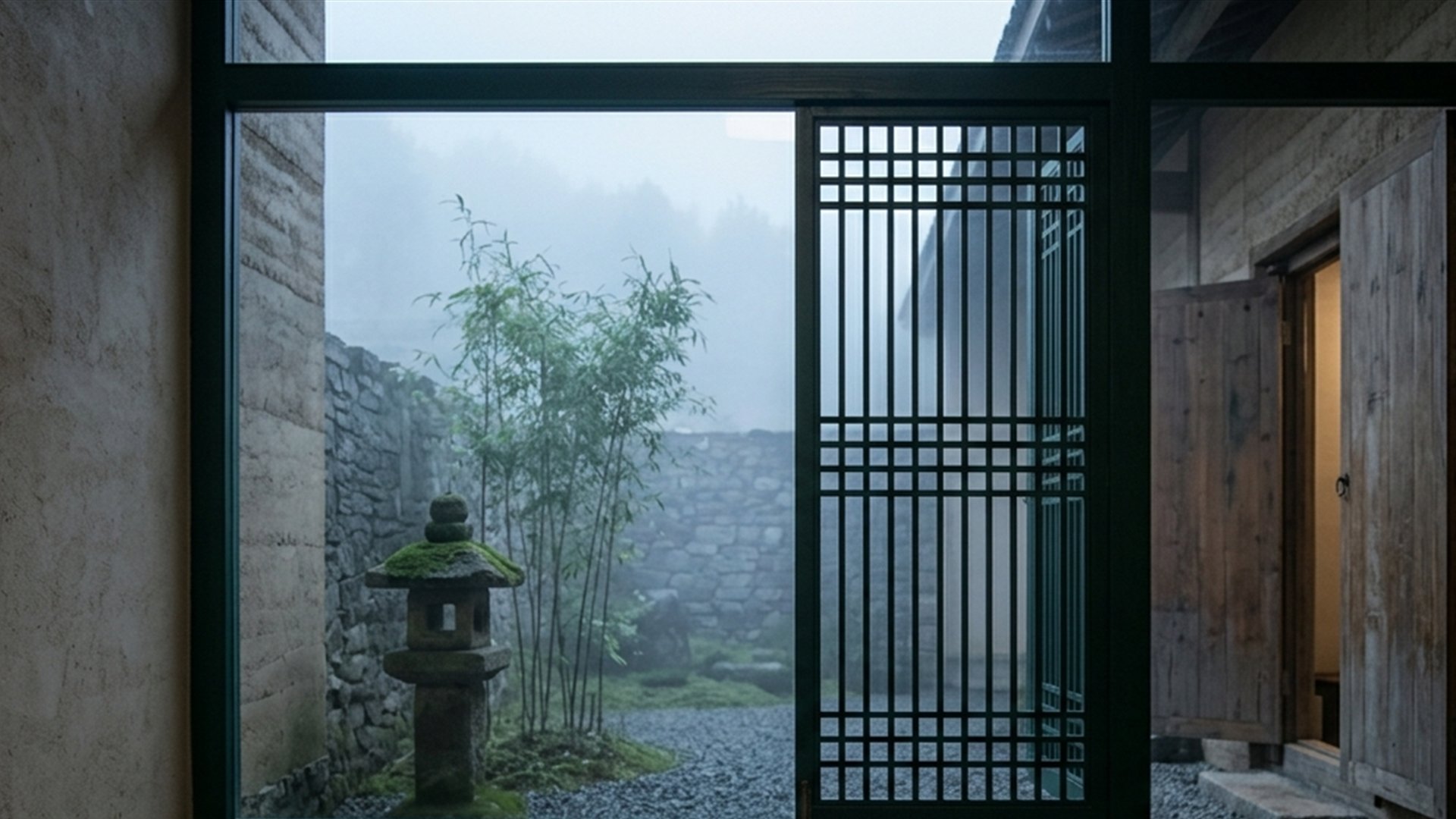
Bedroom feng shui
A bedroom cannot command fortune. It can, however, make rest easier to receive and help the body understand that the day has ended.
A bedroom does not need to look like a showroom to feel settled. Before buying charms, replacing furniture, or worrying about every compass direction, begin with the parts of the room that affect daily life: whether you can move around safely, sleep without avoidable disturbance, open a window or use ventilation, and reach the bed without navigating clutter.
Traditional feng shui offers another way to read the same room. It pays attention to the relationship between the bed, door, windows, beams, mirrors, and the balance of activity and rest. These ideas are part of a long-standing Chinese cultural practice; they should not be presented as scientific proof that a layout will create health, wealth, romance, or luck.
This guide keeps those two layers separate. Use the practical layer to solve observable problems. Use the traditional layer, if it is meaningful to you, as a framework for attention, symbolism, and personal comfort.
What to change first
Work in this order:
- Remove safety and movement problems. Clear the route from the door to the bed, secure unstable furniture, and keep exits and ventilation openings unobstructed.
- Reduce sleep disruption. Address intrusive light, noise, uncomfortable temperature, and screens or work cues that keep the room mentally active.
- Improve air and moisture control. Use available ventilation, identify persistent dampness or odours, and deal with the source rather than masking it with fragrance.
- Give the bed a stable position. Choose the best workable wall and make access practical for the people who use the room.
- Only then refine symbolism and appearance. Mirrors, colours, paired objects, plants, and traditional feng shui adjustments are secondary to a room that functions safely.
If you rent, share a room, or cannot move the bed, smaller changes still count. A clear walkway, better curtain, quieter charging location, repaired drawer, or reduced pile beside the bed may be more useful than a complete redesign.
Mistake 1: The path to the bed is crowded
What can be checked
Walk from the doorway to each side of the bed in ordinary lighting. Notice bags, cables, sharp furniture corners, loose rugs, laundry, and drawers that block the route when open. A crowded path is inconvenient and can increase the chance of trips, especially at night.
Start by removing items from the floor and giving frequently used objects a fixed home. Do not narrow an exit or block a heating, cooling, or ventilation opening. If a wardrobe door and bedroom door collide, change how the space is used before adding more storage.
Traditional feng shui reading
Feng shui often describes a clear approach to the bed as allowing qi to arrive and circulate without obstruction. In cultural terms, this is a way of noticing whether the room feels compressed or unsettled. It is not evidence that clutter directly causes misfortune.
Mistake 2: The bed is placed without a sense of support
What can be checked
A bed usually feels more stable when its head is against a solid, dry wall and the sleeper can get in and out without squeezing past obstacles. Check for practical issues before deciding where it belongs: traffic noise, outdoor light, radiators, air-conditioning drafts, damp patches, and access to doors and windows.
There is no universal best direction for every bedroom. The most useful position is the one that balances sleep conditions, safe movement, usable storage, and the needs of everyone sharing the bed.
Traditional feng shui reading
Many feng shui traditions favour a solid wall behind the headboard and a view of the door without placing the bed directly in line with it. This is sometimes called a commanding or protected position. Treat it as a compositional principle rather than a guaranteed formula. If the room cannot accommodate it, do not make the layout less safe merely to satisfy the rule.
Mistake 3: Light is treated as decoration only
What can be checked
Daylight helps a room function during waking hours, while intrusive light at night can disturb sleep. The US National Heart, Lung, and Blood Institute recommends keeping the bedroom quiet, cool, and dark. Check streetlights, bright device indicators, hallway light, and early sunlight rather than assuming thicker curtains are always necessary.
Use layered lighting: adequate light for dressing and cleaning, plus a lower, warmer bedside light for the evening. Blackout curtains or an eye mask may help where outdoor light is difficult to control, but windows and vents should remain usable.
Traditional feng shui reading
Feng shui may describe a bedroom as more yin than active areas of the home: quieter, softer, and less visually stimulating. This does not mean making the room gloomy all day. A practical interpretation is to support different conditions for daytime use and nighttime rest.
Mistake 4: Airflow and dampness are hidden with fragrance
What can be checked
Persistent condensation, visible mould, musty smells, or damp materials need investigation. The US Environmental Protection Agency identifies source control and improved ventilation as important ways to improve indoor air quality. Open windows when outdoor conditions and personal safety allow, use installed exhaust or ventilation systems correctly, and keep vents clear.
Incense, candles, diffusers, and sprays do not fix moisture or ventilation problems. Fragranced or burning products can also be irritating for some people. If mould is extensive, keeps returning, or follows water damage, seek qualified building or health guidance rather than relying on a layout change.
Traditional feng shui reading
Fresh, moving air is commonly associated with living qi, while stale or damp areas are treated as stagnant. Here the traditional language and observable maintenance needs point in a similar direction, but the practical reason to act is the condition of the room itself.
Mistake 5: Work, entertainment, and sleep occupy the same visual field
What can be checked
The bedroom may also be an office, especially in a small home. The issue is not that a desk is inherently "bad feng shui"; it is whether unfinished work, alerts, cables, or a bright screen remain prominent when you are trying to sleep. Sleep guidance from the NHLBI recommends using the hour before bed for quiet time and avoiding bright artificial light from devices.
Where possible, place the desk outside the direct view from the pillow. If that is impossible, close the laptop, put work materials in one container, and switch off nonessential indicators at the end of the day. A repeatable closing routine matters more than a decorative screen.
Traditional feng shui reading
Traditional advice often separates active, task-oriented yang activity from the more restful yin character of a bedroom. A modern, modest translation is to create a visible boundary between work time and sleep time.
Mistake 6: Mirrors are blamed for every poor night
What can be checked
A mirror can reflect outdoor light, a moving screen, or the bedroom door into the sleeper's view. Test the actual effect: sit or lie in the usual sleeping position after dark and check whether reflections are distracting. If they are, change the angle, move the mirror, or cover it at night. If they are not, there may be no practical problem to solve.
Traditional feng shui reading
Some feng shui schools discourage a mirror directly facing the bed, often because reflection is considered activating or symbolically unsettling. Practices vary. There is no good basis for claiming that such a mirror inevitably harms relationships or health.
Mistake 7: Storage accumulates under and around the bed
What can be checked
Under-bed storage may be necessary. Keep it dry, contained, and easy to clean around; avoid storing leaking products, damp textiles, or items that prevent inspection of the floor and wall. Reduce dust according to the needs of the household, particularly where allergies are a concern.
The same principle applies to bedside surfaces. Keep what supports the night routine and relocate the rest. The aim is not moral purity or perfect minimalism, but fewer obstacles and fewer unfinished tasks in sight.
Traditional feng shui reading
Feng shui commonly prefers open space beneath the bed so qi can circulate. Where that is unrealistic, orderly and limited storage is a sensible compromise. The cultural idea can guide editing, but it should not be used to shame people living in small spaces.
Mistake 8: Decorative cures come before repair
What can be checked
A crystal, plant, red cord, pair of lamps, or new colour scheme cannot repair a loose socket, unstable shelf, water leak, broken blind, or persistent noise. Fix maintenance issues first. Keep plants only where light and care are suitable, and consider pets, children, allergies, and toxicity before choosing species.
Traditional feng shui reading
Objects in feng shui can carry personal or cultural meaning, but meaning works best when the underlying room is cared for. Choose a small number of objects you understand and value rather than filling the bedroom with generic "cures."
A practical 20-minute reset
If you want to begin today, use this sequence:
- Clear the floor route from the door to the bed.
- Remove rubbish, cups, and damp laundry.
- Check that windows, vents, and doors can operate normally.
- Lie on the bed and identify the most intrusive light, reflection, sound, or work cue.
- Make one change to that disturbance.
- Put the five most-used nighttime items in consistent places.
- Write down any repair or moisture issue that needs proper follow-up.
Observe the room for a week. Useful questions are concrete: Is it easier to move through? Is the room darker at the intended sleep time? Does it smell less musty? Can work materials be put away faster? These observations are more reliable than trying to decide whether the room "feels lucky."
When traditional feng shui is useful
Traditional feng shui can be useful as a reflective design language. It may help you notice exposure, balance, thresholds, clutter, and the emotional meaning of objects. It also belongs to a diverse cultural history; different schools may give different advice about direction, timing, and symbols.
Use it with proportion. No bedroom arrangement can guarantee sleep, health, a relationship, fertility, wealth, or protection from harm. Persistent insomnia, breathing difficulty, mould, unsafe wiring, structural damage, or serious distress needs the appropriate medical, building, electrical, or mental-health support.
Frequently asked questions
1. Must the bed face a particular compass direction?
No single direction works for every person and every room. Some feng shui schools calculate preferred directions, but practical constraints should come first: safe access, noise, light, airflow, dampness, and a stable wall. Direction can be considered later as a cultural preference, not a promised outcome.
2. Is it bad feng shui to keep a mirror in the bedroom?
Not automatically. Check whether it reflects light, movement, or a screen into the bed. If it causes a real distraction, move, angle, or cover it. The belief that a mirror facing the bed is overly activating belongs to some feng shui traditions, not to established sleep science.
3. What if I cannot move my bed?
Improve what is controllable: clear the approach, stabilise the headboard, reduce nighttime light and noise, keep ventilation openings usable, and create a simple end-of-day routine. A workable small change is better than forcing an impractical layout.
Sources and further reading
- National Heart, Lung, and Blood Institute. Healthy Sleep Habits. Accessed 2026-08-04.
- US Environmental Protection Agency. Improving Your Indoor Environment. Accessed 2026-08-04.
- US Environmental Protection Agency. A Brief Guide to Mold, Moisture and Your Home. Accessed 2026-08-04.
- Encyclopaedia Britannica. Feng shui. Accessed 2026-08-04.
The health and housing sources above support the practical discussion of sleep conditions, ventilation, moisture, and maintenance. The Britannica entry is included for cultural background. None of these sources establishes that feng shui arrangements produce health, wealth, or other promised outcomes.